
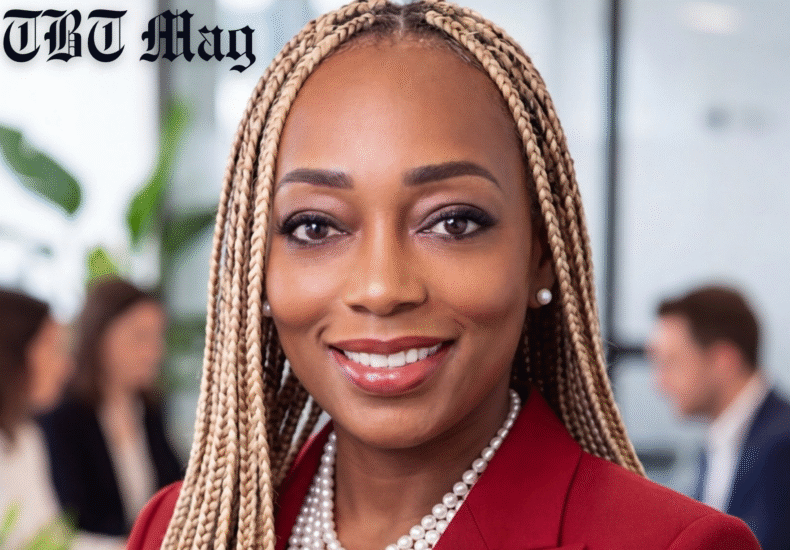
DR. DARCELL L. STREETER AND THE BUSINESS OF HUMAN POTENTIAL
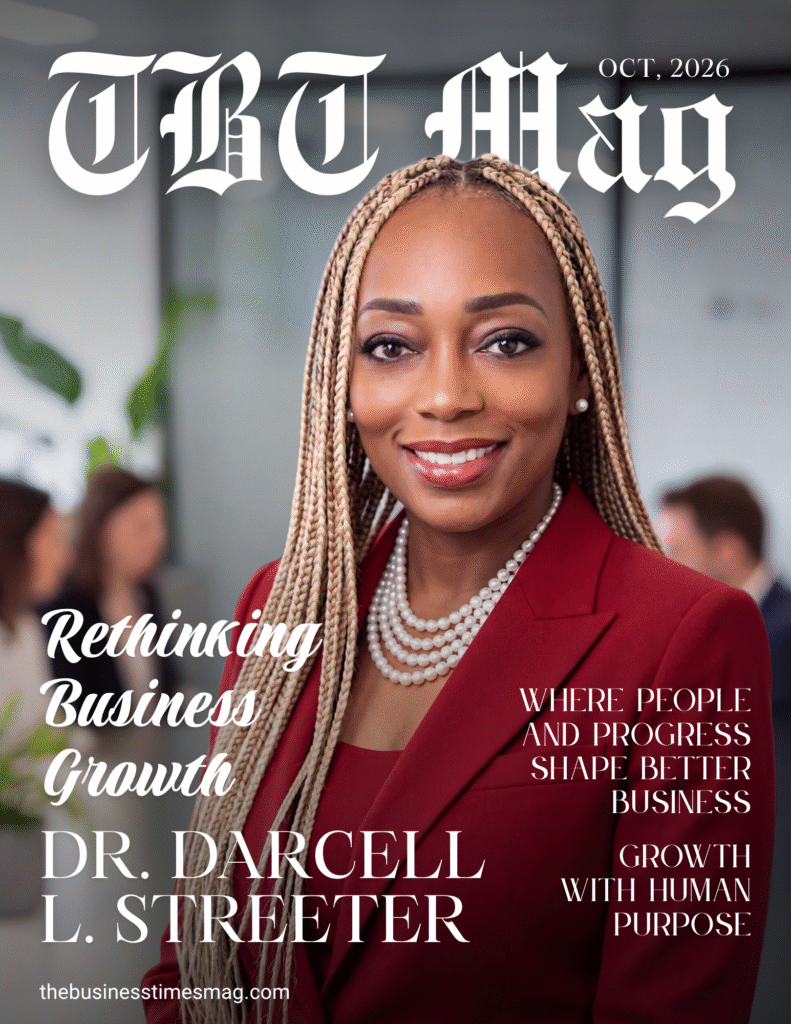
In a world obsessed with performance, Dr. Darcell L. Streeter is building a different conversation around what organizations need most: people who are genuinely equipped to grow.
THE BUSINESS CASE FOR UNDERSTANDING PEOPLE
Business conversations often revolve around numbers.
Revenue. Growth. Productivity. Market share. Efficiency.
Those measurements matter, but behind every one of them are people making decisions, learning new skills, managing uncertainty and trying to perform inside increasingly complicated organizations.
Dr. Darcell L. Streeter has spent much of her career looking at that less visible side of business.
Her work sits at the intersection of human development, learning sciences and leadership. Rather than treating these areas as separate disciplines, she considers them parts of the same conversation.
How do people develop?
How do they learn?
What allows knowledge to become capability?
And what happens when organizations ask people to change without changing the environments in which they are expected to work?
These questions have become particularly important as companies navigate a workplace that is changing rapidly.
Technology is evolving. Roles are shifting. Generational expectations are changing. Organizations are becoming more globally connected.
Yet the human learning process remains deeply important.
Streeter’s work begins there.
LOOKING BEYOND THE TRAINING ROOM
For many organizations, professional development begins and ends with a training program.
An employee attends a workshop, completes a course, receives a certificate and returns to work.
But Streeter takes a longer view.
Learning becomes valuable when it can travel beyond the original environment.
A person should be able to take an idea from a classroom, meeting or development program and use it when the circumstances are different.
That is one reason she places such importance on transfer.
The real test is not whether someone understood a concept while an instructor was present.
The test is whether that understanding remains available when the person is working independently, facing a new problem or making a decision months later.
For business leaders, this creates an important distinction.
There is a difference between delivering information and building capability.
Organizations that understand that difference can begin to think about development in a more meaningful way.
The goal is not simply to make employees more informed.
It is to make them more capable.
THE PEOPLE WHO DO NOT FIT THE TEMPLATE
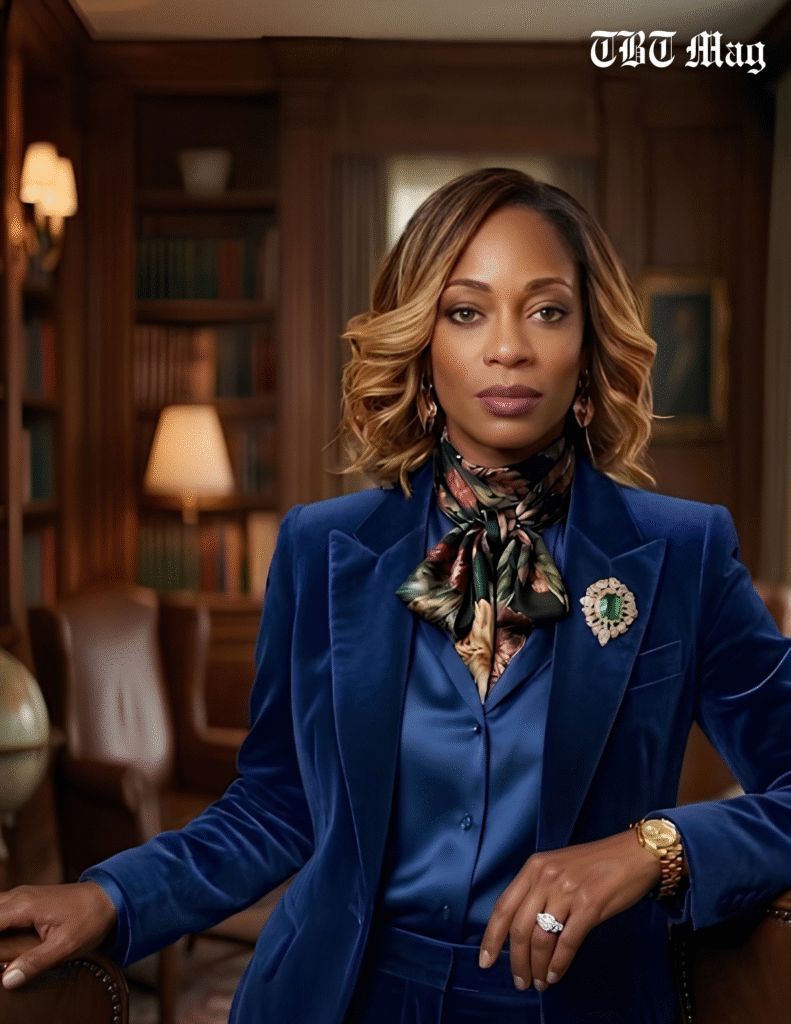
One of the areas that has shaped Streeter’s research is culturally responsive learning.
Modern workplaces bring together people with different languages, generations, experiences and educational backgrounds. Yet many systems continue to operate according to a relatively narrow idea of what a learner or professional should look and sound like.
That can create an invisible disadvantage.
A person may possess extensive knowledge and professional experience but still be treated as inexperienced because they are unfamiliar with one particular system.
Someone may be highly capable while communicating differently from the majority of people in the room.
Someone may need a different entry point into a subject without needing lower expectations.
Streeter believes those differences should be considered during the design process rather than addressed afterward.
This is particularly important for organizations trying to build genuinely global teams.
Inclusion cannot simply mean inviting different people into an existing structure.
The structure itself may need to become more flexible.
LEADERSHIP THAT LEAVES ROOM TO THINK
Another important element of Streeter’s philosophy is her belief in the value of pause.
Business culture often celebrates constant movement.
The busiest person can appear to be the most committed. The fastest decision can appear to be the strongest decision. A packed calendar can look like evidence of importance.
But constant activity does not automatically create meaningful progress.
Streeter’s own experience taught her this lesson.
She once approached leadership through urgency and relentless forward movement. Over time, her work in learning sciences gave her a deeper understanding of something she had experienced personally.
People require space to process.
They need opportunities to reflect.
They need enough capacity to absorb what is happening around them.
This thinking influenced her Softness as a Superpower framework and PAWS framework, which bring the concept of pause into leadership practice.
The idea is not to remove accountability.
It is to create better conditions for judgment and development.
A thoughtful pause can allow a leader to distinguish between what is urgent and what is actually important.
It can also give employees the space to think rather than simply react.
REDEFINING WHAT A STRONG WORKFORCE LOOKS LIKE
The traditional model of workforce development often focuses on skills.
Teach the skill.
Measure the skill.
Improve the skill.
Streeter’s approach expands the conversation.
Skills matter, but people also need the ability to adapt those skills when circumstances change.
They need confidence.
They need context.
They need environments where learning can continue.
They also need leaders who understand that development is not something that happens once a year during a performance review.
It happens continuously.
Every project teaches something.
Every difficult conversation creates an opportunity for development.
Every transition asks people to learn.
Every new technology changes the skills an organization requires.
Seen this way, workforce development becomes part of everyday business rather than a separate corporate function.
That shift could have significant implications for companies operating in uncertain markets.
WHEN TECHNOLOGY CHANGES THE RULES
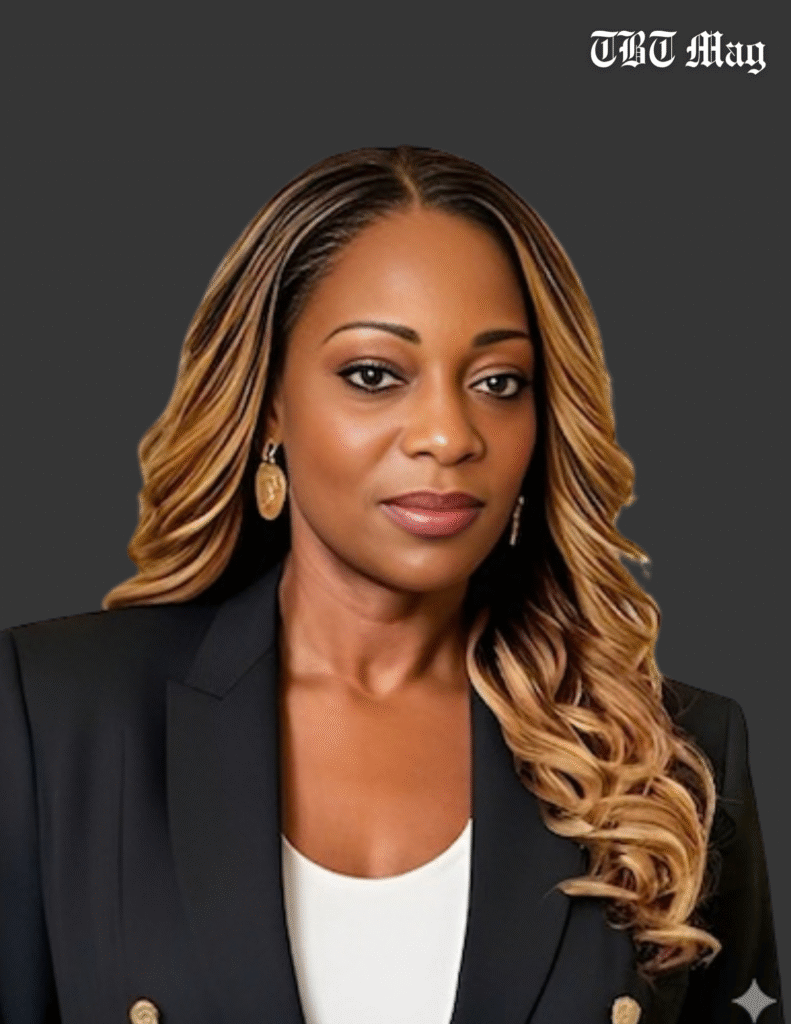
Artificial intelligence has accelerated the urgency of these questions.
Organizations are adopting new tools at remarkable speed, but technology does not eliminate the need for human learning.
It increases it.
As AI becomes integrated into professional environments, employees will need to understand not only how to use new systems but also how to evaluate information, make decisions and adapt when technology changes again.
Streeter’s research into generative AI and culturally responsive design addresses this challenge from a human development perspective.
Her concern is how emerging technology can be designed to serve people with different backgrounds and learning experiences.
The issue is larger than accessibility.
It is about whether the assumptions built into technology reflect the diversity of the people who will eventually depend upon it.
A system can be technically sophisticated and still create barriers if its design does not account for the realities of its users.
For businesses, that makes human centered design more than a philosophical idea.
It becomes part of responsible growth.
AN INTERGENERATIONAL VIEW OF DEVELOPMENT
Streeter’s future vision extends this philosophy into education and workforce development through Circle Forward, her Global Life and Learning Hub.
The concept connects K through 12 STEAM education with adult vocational development.
At its heart is an idea that challenges the traditional separation of generations.
Young people and adults do not have to occupy completely separate learning worlds.
Knowledge can move in both directions.
Younger learners may bring familiarity with emerging technologies and digital tools. Older learners may contribute professional knowledge, practical experience and a different understanding of how industries operate.
The result is an environment where age does not automatically determine who teaches and who learns.
That principle could become increasingly valuable as people work longer, careers change more frequently and technology continues to reshape professional life.
TAKING OPPORTUNITY CLOSER TO HOME
Another dimension of Circle Forward is its geographic vision.
Streeter is developing the concept with regional hubs planned for West Africa, Latin America and Southeast Asia.
The intention is to create vocational pathways that respond to an economy increasingly influenced by automation while helping women access global economic opportunities without necessarily leaving their communities.
That ambition reflects a broader understanding of economic development.
Opportunity does not always have to require relocation.
With access to appropriate education, technology and professional pathways, people can participate in global markets while remaining connected to the communities that shaped them.
For developing regions in particular, that possibility carries significant implications.
Education becomes more than preparation for employment.
It becomes infrastructure for participation.
MEASURING WHAT ACTUALLY LASTS
Streeter’s philosophy ultimately returns to measurement.
Businesses measure what they can see.
But some of the most valuable outcomes are difficult to capture immediately.
A new confidence may not appear on a quarterly report.
A stronger decision making culture may take years to become visible.
An employee who learns how to approach a problem independently may create value long after the original training has been forgotten.
This is why Streeter is less interested in recognition for its own sake than in evidence that her work continues to make a difference.
Her measure of success is what remains.
If a framework continues to be used without her presence, that matters.
If a learner carries knowledge into a new environment, that matters.
If an organization becomes more capable rather than simply more active, that matters.
It is a quiet definition of impact, but a powerful one.
A MORE HUMAN BUSINESS FUTURE
The business world is entering a period in which technological capability will continue to expand.
But technological capability alone will not determine which organizations develop resilient, adaptable and thoughtful workforces.
The organizations that succeed in navigating change will also need to understand how people learn.
That is the space Dr. Darcell L. Streeter continues to explore.
Her work asks businesses to look beyond the surface of performance and examine the conditions that make performance possible.
It asks leaders to reconsider the difference between activity and development.
It asks educators to look beyond conventional categories.
And it asks technology designers to remember that every system eventually meets a human being.
For Streeter, the future is not about choosing between business performance and human development.
The two are connected.
Organizations are built by people.
They learn through people.
They change through people.
And ultimately, their ability to create lasting value depends on whether the people inside them are given the opportunity to grow.
That may be one of the most important business lessons of the years ahead.
The strongest investment an organization can make is not simply in a new system, a new platform or a new strategy.
It is in understanding the people who will bring all three to life.
Leave a Reply