

Dr. Ko-Cheng Fang: The Visionary Bridging Photonic Science, Art, and the Future of Intelligent Technology
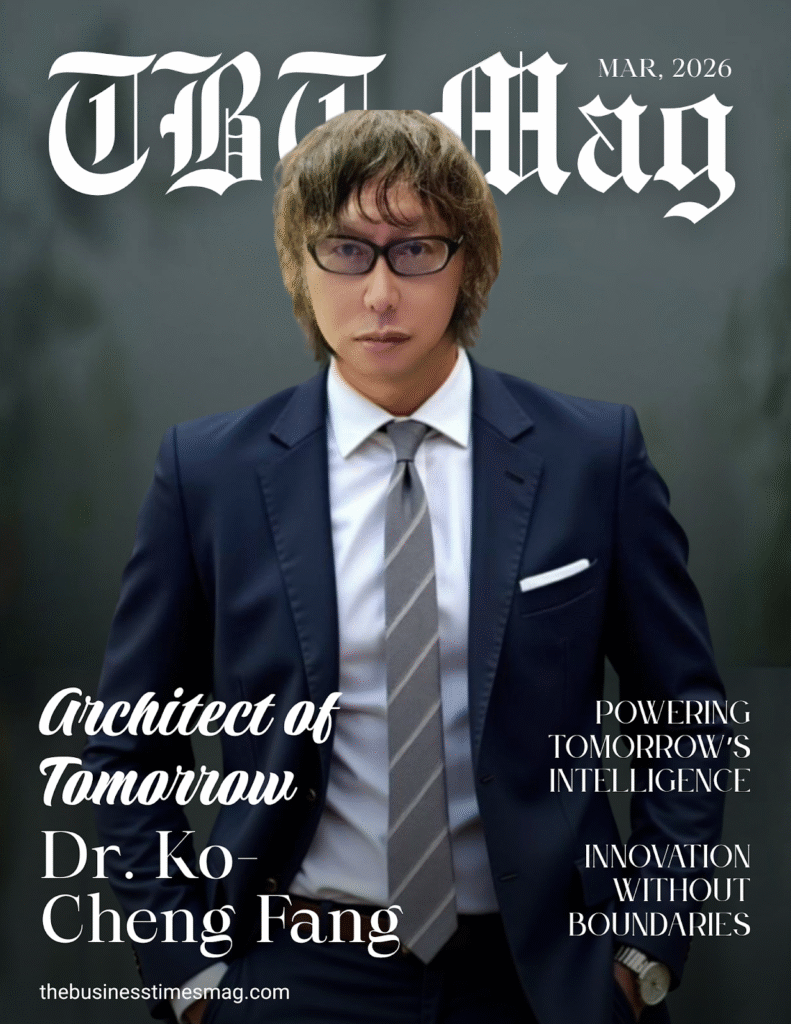
In an era when innovation increasingly demands the convergence of disciplines, few figures embody that fusion as naturally as Dr. Ko-Cheng Fang. An inventor, scientist, entrepreneur, and artist, Dr. Fang stands at the intersection of technology and creativity—leading research that ranges from photonic quantum computing and biotechnology to materials science and luxury design.
As the Founder, Chairman, and CEO of LongServing Technology Co., Ltd. in Taipei, Dr. Fang has built a company that does not follow conventional innovation paths. Instead, it pursues a bold vision: technologies that redefine computing power, sustainable materials, and even the relationship between science and culture. His work reflects a rare intellectual breadth—one that recalls Renaissance thinkers who moved effortlessly between art, science, and philosophy.
Yet behind the achievements lies a simple starting point: passion.
The Passion That Drives Discovery
For Dr. Fang, the origin of invention is neither strategy nor market demand—it is passion.
He often describes work not as obligation but as a form of devotion. Many people, he observes, see work as something to endure while reserving joy for leisure. But he believes the opposite: meaningful work itself can become a profound source of fulfillment once its early hardships are overcome.
That philosophy guided one of his most challenging scientific pursuits—recreating Imperial Green jadeite in the laboratory.
Natural jadeite of this quality is among the rarest gemstones on Earth. Historically prized by Chinese imperial courts and famously adored by Empress Dowager Cixi, Imperial Green jadeite forms only under extremely rare geological conditions. Even in vast deposits of jade-bearing rock, gem-grade material is extraordinarily uncommon.
Before Dr. Fang’s efforts, attempts to reproduce jadeite synthetically had largely failed. Two formidable institutions—the American conglomerate General Electric and a major laboratory in Changchun, China—had attempted the challenge without success.
To many observers, the task appeared impossible.
Yet thousands—indeed tens of thousands—of experimental failures did not deter him. Eventually, one experiment succeeded. A single crystal of laboratory-grown Imperial Green jadeite emerged, demonstrating that the gemstone’s complex crystalline structure could be replicated under controlled conditions.
For Dr. Fang, the moment symbolized something larger than a scientific milestone. It illustrated the essence of invention: perseverance sustained by passion.
An Artist at Heart
Long before entering the world of advanced technology, Dr. Fang’s first creative language was painting.
He began studying art as a child, initially practicing traditional Chinese gongbi painting—an intricate technique known for precise lines and delicate detail. Over time he expanded into Western watercolor and oil painting, absorbing influences from classical European realism and Impressionist color composition.
His childhood home contained a private studio filled with plaster sculptures, art books, and the distinctive scent of paint and mineral spirits. In that environment, art became not merely a hobby but a way of perceiving the world.
Dr. Fang often compares invention to sculpture. Just as a sculptor transforms rough stone by removing excess material, an inventor refines ideas through elimination—discarding failed approaches until the essential solution remains.
This artistic mindset profoundly shaped his scientific method.
In technology research, thousands of experiments may fail before a breakthrough emerges. For Dr. Fang, each failure represents the removal of unnecessary layers, bringing the final form closer to clarity.
It is a philosophy that blends artistic intuition with analytical discipline.
Breaking the Limits of Electronic Chips

Perhaps the most ambitious of Dr. Fang’s technological pursuits lies in the realm of photonic quantum computing.
For decades, the computing industry has relied on electronic semiconductor chips, where information is transmitted through electrons. While these chips have achieved extraordinary performance improvements, they now approach fundamental physical limits.
Transistor sizes have already shrunk to just a few nanometers. Further miniaturization becomes increasingly difficult due to energy consumption, heat dissipation, and quantum mechanical effects.
Meanwhile, the demand for computing power—driven by artificial intelligence, cloud computing, and large-scale data analysis—continues to grow exponentially.
Dr. Fang believes the next leap in computing must move beyond electrons entirely.
His research focuses on photonic computing systems that use photons—particles of light—to transmit and process information. Light travels faster than electricity and generates significantly less heat, making it an attractive medium for next-generation processors.
However, photonic computing faces a critical obstacle: wavelength.
Conventional silicon photonics operates at wavelengths around 1300–1500 nanometers, far larger than the nanoscale circuitry used in modern chips. To integrate photonic signals into nanoscale computing architectures, dramatically shorter wavelengths are required.
This challenge led Dr. Fang to develop a new photonic quantum material capable of emitting light at approximately two nanometers—a scale approaching X-ray wavelengths. He refers to this innovation as “X-Photon.”
The material enables photons to propagate through nanoscale pathways, potentially forming the basis of photonic quantum transistors and processors. When combined with photonic gate designs, the technology could allow optical signals to represent digital data in ways similar to electronic chips—but at dramatically higher speeds and lower energy consumption.
If successfully commercialized, photonic quantum chips could transform industries ranging from artificial intelligence and robotics to autonomous vehicles and advanced scientific computing.
Building LongServing Technology
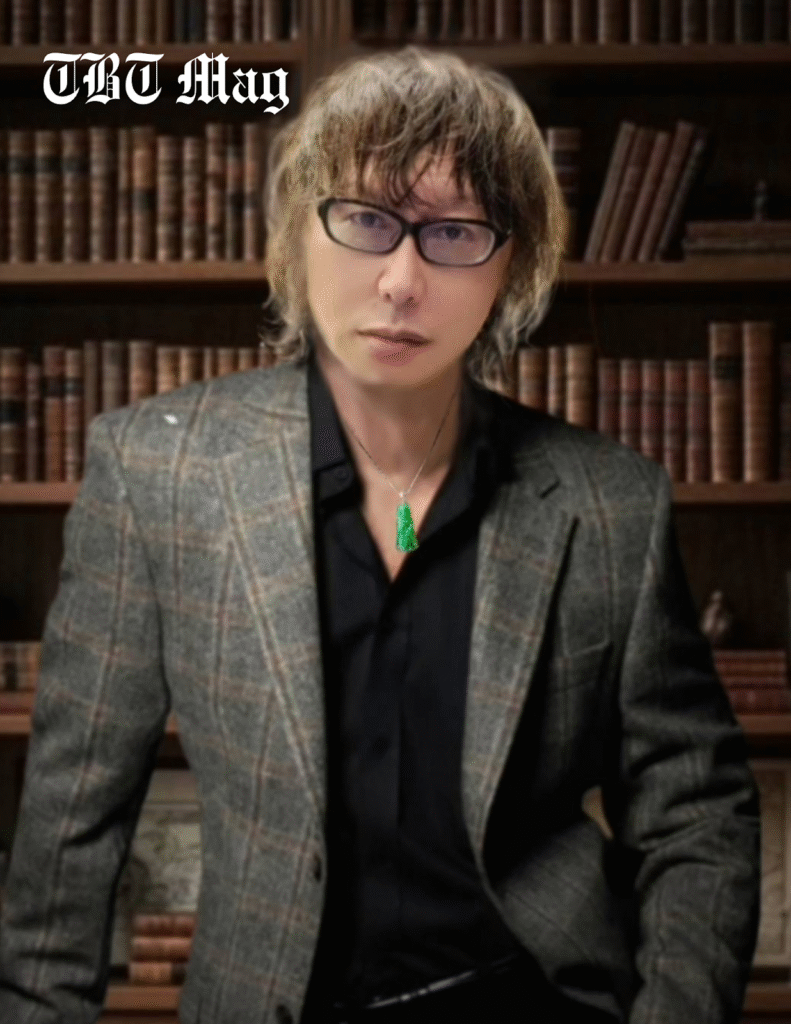
Dr. Fang founded LongServing Technology Co., Ltd. with a clear mission: to pursue frontier technologies that shape the future rather than merely follow current trends.
From its earliest days, the company explored cybersecurity systems, cloud-based data architectures, and programmable encryption technologies. These developments later attracted attention from the United States Department of Homeland Security, which adopted certain patented technologies for information security applications.
Today, LongServing Technology’s research portfolio spans several fields:
• Photonic quantum computing
• Artificial intelligence robotics
• Advanced materials science
• Laboratory-grown gemstones
• Biotechnology and pharmaceutical research
• Cross-disciplinary art and design
Each project reflects Dr. Fang’s belief that technological progress should address both human needs and environmental sustainability.
Biotechnology and Medical Research

Beyond computing and materials science, LongServing Technology has also pursued research in biotechnology.
The company has investigated plant-derived bioactive compounds extracted from organic essential oils. Laboratory studies conducted under European testing standards have explored their potential ability to inhibit or destroy certain cancer cell lines, including lung cancer and liver cancer cells.
Future research aims to enhance these compounds using nanotechnology and targeted delivery methods, potentially enabling treatments that directly attack tumor cells without invasive surgery.
While these efforts remain in experimental stages, they illustrate the breadth of LongServing’s scientific ambitions.
Technology Meets Luxury and Art
In recent years, Dr. Fang has also expanded LongServing Technology’s creative vision into the luxury industry.
At first glance, the worlds of semiconductor research and high fashion might seem unrelated. Yet for Dr. Fang, both are expressions of artistry and craftsmanship.
In 2026, the company launched its first jadeite handbag collection, integrating laboratory-grown jadeite directly into the structural design of each bag. The gemstone’s luminous green hue complements the elegance of classic handbag silhouettes, creating pieces that merge traditional Eastern aesthetics with contemporary design.
At the same time, Dr. Fang began transforming his own paintings into wearable art—printing them onto apparel, footwear, and accessories.
These products form part of LongServing’s emerging “Trendy Boutique” collection, marking the company’s official entry into the global fashion landscape.
For collectors and design enthusiasts, the collection offers something unusual: luxury items born not from conventional fashion houses but from a scientist’s artistic imagination.
Leadership and Long-Term Vision

Despite the diversity of projects under his leadership, Dr. Fang maintains a consistent philosophy about innovation.
He believes technology must serve humanity rather than disrupt society recklessly. Inventors, in his view, carry responsibility not only to create breakthroughs but also to ensure those breakthroughs benefit future generations.
This perspective shapes LongServing Technology’s collaborative strategy.
Rather than attempting to replace existing semiconductor industries, Dr. Fang advocates cooperation with global chip manufacturers. By adapting current fabrication infrastructure to support photonic quantum chips, the industry could accelerate the transition to optical computing without dismantling existing ecosystems.
Such an approach, he argues, would reduce economic disruption while still enabling technological progress.
Recognition and Global Attention
Dr. Fang’s contributions have increasingly attracted international recognition.
In 2025, he was inducted into the Chinese Role Model Hall of Fame. The following year, he was named among the “Top 10 Leading Men” by Microsoft MSN.
His artistic achievements have also gained global visibility. In January 2026, one of his paintings was displayed on a large digital screen in Times Square, New York—an unusual moment where art and technology intersected on one of the world’s most visible stages.
These milestones underscore his growing influence as both a scientist and cultural figure.
Technology, Humanity, and the Next Era
Looking ahead, Dr. Fang envisions a world shaped by intelligent machines, advanced computing, and human-centered design.
Artificial intelligence and robotics, he believes, will soon become integral parts of everyday life—from manufacturing and infrastructure to domestic assistance. Photonic quantum computing could provide the processing power necessary to support these systems while dramatically reducing global energy consumption.
Yet technological progress must remain aligned with ethical responsibility.
Dr. Fang emphasizes that innovation should respect workers, protect the environment, and create long-term benefits for society. The technologies developed today will shape the world that future generations inherit.
A Legacy of Courage and Curiosity

When asked about the legacy he hopes to leave behind, Dr. Fang returns to a theme that has defined his entire career: courage.
Inventors, he says, must be prepared to endure doubt, criticism, and misunderstanding. Breakthrough ideas often appear unreasonable at first, and those who pursue them may stand alone for long periods.
But if a person possesses talent or vision, he believes they carry a responsibility to use it.
History offers many examples of individuals whose unconventional thinking reshaped the world—from pioneering scientists to revolutionary entrepreneurs.
For Dr. Ko-Cheng Fang, that same spirit continues to guide his journey.
Whether through photonic quantum computing, sustainable gemstone engineering, biotechnology research, or artistic expression, he is pursuing a single idea: that creativity and science, when combined with determination, can redefine what humanity believes possible.
And in that pursuit, the boundaries between technology, art, and imagination begin to disappear.
Contact info –
Email: service@longserving.com.tw
Website: www.longserving.com.tw
Instagram: @ko_cheng_fang_david
Leave a Reply